


- Home
- >
- Applications
- >
- Logistics Loading
- >
- Scissor Lift vs Boom Lift: Essential Solutions for Logistics Loading & Unloading
Scissor Lift vs Boom Lift: Essential Solutions for Logistics Loading & Unloading
2026-06-12 超级管理员 Views: 0In modern logistics and warehouse operations, scissor lifts and boom lifts are indispensable for safe, efficient loading and unloading. Choosing the right aerial work platform directly impacts productivity, safety, and cost-effectiveness in material handling. This guide explores their unique advantages and core applications in logistics loading scenarios.
1. Scissor Lifts: The Heavy-Duty Workhorse for Straight-Line Loading
A scissor lift is a vertical-lift platform with a crisscross support structure, designed for stable, high-capacity cargo handling. It excels in vertical lifting and heavy-load transfer in loading bays, warehouses, and distribution centers.
Key Advantages for Logistics Loading
- High Load Capacity: Handles 500kg–10 tons (customizable), ideal for palletized goods, heavy containers, and bulk cargo.
- Ultra-Stable Platform: Rigid scissor structure ensures zero sway during lifting, protecting fragile goods and ensuring operator safety.
- Large Working Area: Spacious platform accommodates multiple operators and full pallet loads, boosting loading efficiency.
- Flexible Installation: Surface-mounted or pit-installed; no complex civil works needed for rapid deployment.
- Cost-Effective: Low maintenance, simple operation, and competitive pricing for long-term logistics use.
Core Logistics Loading Applications
- Loading Bay Height Bridging: Connects warehouse floors (elevated/split-level) to yard level or truck beds, replacing inefficient dock levellers for large height differences.
- Pallet & Container Loading: Perfect for loading/unloading pallets, roll cages, and ULDs (unit load devices) in warehouses, airports, and freight terminals.
- Multi-Level Warehouse Handling: Transfers goods between ground level and mezzanine floors or high racking systems.
- High-Throughput Distribution: Streamlines fast-paced loading in e-commerce fulfillment centers and logistics hubs.
2. Boom Lifts: The Flexible Reacher for Complex Loading Environments
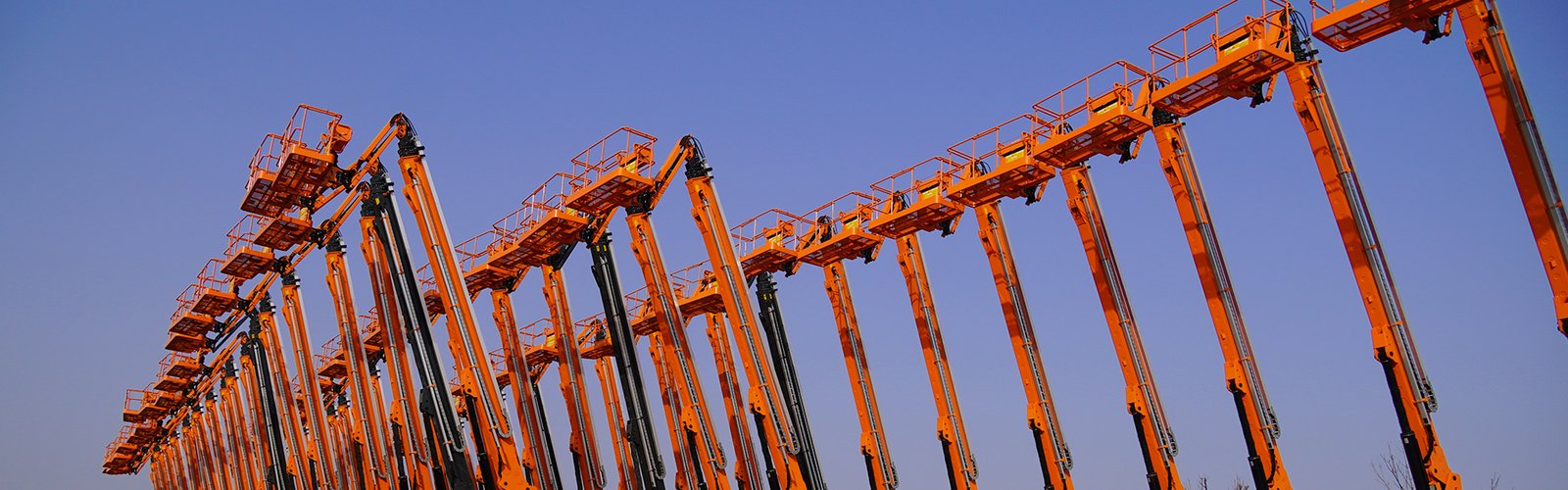
A boom lift (articulated/telescopic) features an extendable arm, enabling horizontal reach, vertical lifting, and obstacle crossing. It is ideal for hard-to-reach loading zones and irregular logistics spaces.
Key Advantages for Logistics Loading
- Exceptional Reach: Working height up to 40m+ and horizontal outreach up to 20m+; some models offer 4m+ underreach for low-level loading.
- Obstacle Crossing: Articulated arms navigate around barriers (e.g., dock equipment, stacked goods) to access tight or blocked loading spots.
- 360° Maneuverability: Rotating platform and steering enable precise positioning in narrow yards or congested loading areas.
- Rough Terrain Performance: 4WD and rugged tires handle uneven surfaces (yards, construction sites) for outdoor loading tasks.
Core Logistics Loading Applications
- Over-Dock & Cross-Yard Loading: Reaches over obstacles to load/unload trucks parked parallel or offset from warehouses.
- High-Bay & Rooftop Loading: Accesses elevated loading points on tall warehouses, container yards, or rooftop storage areas.
- Irregular & Remote Loading Zones: Serves temporary loading bays, construction logistics sites, or remote freight terminals with no fixed docks.
- Airport & Port Cargo Handling: Loads/unloads aircraft cargo holds, shipping containers, and stacked port freight with precise arm control.
3. Scissor Lift vs Boom Lift: How to Choose for Logistics Loading
Feature Scissor Lift Boom Lift
Primary Movement Vertical only Vertical + horizontal + 360° rotation
Load Capacity High (500kg–10 tons) Medium (200kg–500kg)
Reach Low–medium (6–16m) High (13–40m+)
Stability Excellent (zero sway) Good (depends on outreach)
Best For Heavy pallets, straight-line loading, fixed bays Obstacle crossing, high/remote loading, irregular yards
Cost Lower (purchase/rent) Higher (specialized design)
Quick Selection Tips:
- Choose a scissor lift for heavy loads, fixed loading bays, and vertical-only tasks (e.g., pallet loading, dock height bridging).
- Choose a boom lift for hard-to-reach zones, obstacle crossing, and high/remote loading (e.g., over-dock loading, rooftop access).
4. Why Invest in Quality Aerial Work Platforms for Logistics?
- Boost Efficiency: Cut loading/unloading time by 30–50% vs manual labor or forklifts alone.
- Enhance Safety: CE-certified safety features (anti-slip platforms, emergency stop, overload protection) reduce workplace accidents.
- Reduce Costs: Minimize labor expenses, product damage, and downtime with reliable, low-maintenance equipment.
- Scale Operations: Adapt to peak demand (e.g., holiday seasons) with flexible, high-performance loading solutions.
Final Thoughts
Scissor lifts and boom lifts are complementary, not competing solutions for logistics loading. Scissor lifts dominate heavy-duty, straight-line tasks, while boom lifts excel in flexible, hard-to-reach scenarios. By selecting the right aerial work platform for your specific loading needs, you can optimize workflow, ensure safety, and drive profitability in your logistics operations.
Explore our full range of scissor lifts and boom lifts for logistics loading—customizable sizes, load capacities, and power options to match your warehouse or distribution center requirements.